

Mushroom grow kits have become the dominant entry point for indoor cultivation across Europe — particularly in markets where pre-colonised substrate products occupy a clear legal space. For beginners evaluating options, the quality differences between kits are not trivial: environmental stability, contamination risk, and setup difficulty vary considerably between product categories and suppliers.
This comparison examines what to look for in a beginner kit, how different kit types perform across key environmental criteria, and which factors are most predictive of a successful first grow.
What a Grow Kit Actually Is
A mushroom grow kit is a substrate block — typically grain, straw, or coco coir — that has been fully or partially colonised by mycelium prior to shipping. The buyer receives a product that is ready to fruit with minimal additional preparation: the sterilisation, inoculation, and colonisation phases have already been completed by the supplier.
This contrasts with spore syringes or liquid culture products, which require the buyer to complete the full cultivation cycle from inoculation. Grow kits reduce the technical barrier and equipment requirements, making them well-suited to first-time growers who want to observe the fruiting process without mastering sterile technique upfront.
The trade-off: pre-colonised kits have a limited shelf life, are more sensitive to shipping and storage conditions, and offer less control over substrate composition than a from-scratch approach.
Legal Context by Country
Grow kit availability in Europe is shaped by national regulatory frameworks, which vary significantly. Understanding this context helps beginners identify what product types are accessible in their country. Buyers should verify current legal status in their jurisdiction before purchasing. Product availability from online suppliers does not itself indicate legal compliance in the buyer’s country.
Kit Comparison: Key Evaluation Criteria
Environmental Stability
Environmental stability refers to how forgiving a kit is to humidity fluctuations, temperature drift, and minor airflow errors. Kits with larger substrate volumes and dense colonisation hold moisture longer and are less sensitive to daily humidity management gaps. Smaller kits dry out faster and require more consistent misting.
Kits supplied with a humidity tent or bag enclosure maintain a microclimate around the fruiting block and are significantly more beginner-friendly than those requiring a separate fruiting chamber. The bag or tent reduces the number of variables the grower must manage.
Contamination Risk
Contamination risk varies with substrate type, colonisation density, and how the kit was handled in transit. Grain-based kits have higher contamination potential than bulk coir or straw substrates because grain provides a richer nutrient base for competing organisms. Fully colonised kits are more resistant to contamination than partially colonised ones — the mycelium’s competitive exclusion effect is stronger at full colonisation.
Temperature during shipping matters: kits exposed to extreme heat or cold during transit arrive in compromised condition. Established suppliers in northern Europe typically mitigate this with insulated packaging during warmer months.
Setup Difficulty
Setup difficulty ranges from opening a bag and adding water (lowest difficulty) to preparing a fruiting chamber with active FAE and humidity control (moderate difficulty). The simplest kits — pre-colonised blocks supplied with a humidity bag — require no additional equipment. More complex kits require the grower to source and manage a fruiting environment independently.
Maintenance Requirements
Ongoing maintenance depends on kit design. Bag-based fruiting environments with self-contained humidity retention require misting once or twice daily. Open-air fruiting setups require more frequent misting and closer monitoring. Kits with reusable substrate blocks can be reflushes 2–3 times with appropriate soaking and recovery periods, extending the value of a single kit purchase.
Beginner Kit Comparison by Type
Pre-colonised block + humidity bag: Environmental stability is high; contamination risk is low to medium; setup difficulty is very low; maintenance requires twice-daily misting; typically supports 2–3 flushes. This is the most forgiving kit type for beginners.
All-in-one grain bag (self-healing port): Environmental stability is medium; contamination risk is low due to the sealed environment; setup difficulty is low; minimal maintenance until fruiting stage begins; typically supports 1–2 flushes.
Substrate block only (no fruiting environment): Environmental stability is low to medium; contamination risk is medium; setup difficulty is moderate since a separate chamber must be sourced; requires active monitoring throughout fruiting; supports 2–3 flushes.
Spore syringe + substrate kit: Environmental stability is low; contamination risk is high due to open inoculation requirements; setup difficulty is high; requires management of the full cultivation cycle; flush potential varies significantly by setup.
European Supplier Landscape
The European grow kit market is concentrated in the Netherlands, where several established suppliers have operated for over a decade. Netherlands-based suppliers have logistical advantages for EU shipping — typically 2–5 business days to most European countries — and operate in a more established regulatory environment for this product category.
Key supplier characteristics to evaluate:
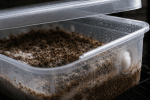
- Colonisation quality: Fully white, dense mycelium throughout the block. Green, black, or pink patches indicate contamination
- Customer support quality: Responsive suppliers who address contamination and failure cases provide significant value for beginners
- Substrate formulation transparency: Suppliers who disclose substrate composition allow buyers to better understand contamination risk
- Packaging and cold-chain management: Insulated packaging in summer; appropriate moisture barriers throughout
- Return and replacement policy: Established suppliers typically offer replacement for contaminated kits received in poor condition
Recommended Equipment for Kit Growers
Even with a beginner-friendly kit, a small set of monitoring tools significantly improves consistency and outcome quality:
- Digital hygrometer with temperature display — placed inside the fruiting environment; €8–20
- Clean spray bottle for misting — dedicated to cultivation use only
- Nitrile gloves — for handling substrate and reducing contamination risk
- 70% isopropyl alcohol — for surface sterilisation during setup
The hygrometer is the single highest-value addition to any kit grow. Most kit failures attributable to environmental issues are directly traceable to operating outside the humidity or temperature range the grower assumed (but did not measure) they were maintaining.
Evaluating Kit Quality on Arrival
When a kit arrives, assess the following before initiating fruiting:
- Colonisation coverage: The substrate should appear fully white or off-white throughout. Green, black, or pink patches indicate contamination — contact the supplier before proceeding
- Firmness: The substrate block should feel firm and hold its shape. Excessive softness suggests potential bacterial contamination
- Smell: Fresh mycelium has a mild, earthy, or slightly mushroom-like odour. Sour or ammonia-like smells indicate bacterial contamination
- Packaging integrity: Damaged bags or containers increase the risk of prior contamination exposure during transit
Kit Grows as a Learning Environment
Beyond the practical output, a grow kit provides a structured introduction to the variables that determine cultivation success. Observing how humidity affects pin development, how temperature changes alter growth speed, and how contamination appears and progresses builds the observational vocabulary needed for more advanced cultivation approaches.
Most experienced cultivators working with bulk substrates and from-scratch methods started with kit grows. The transition from kit to substrate-level work is a natural progression once environmental requirements and contamination recognition skills are established.
Continue Reading
- Why Most Beginner Mushroom Grows Fail: 5 Environmental Mistakes to Avoid
- Beginner Indoor Mushroom Cultivation: Environment, Equipment, and Common Failure Points
- Indoor Mushroom Cultivation Systems: Environment, Sterility, and Monitoring Basics
Weekly Fungal Systems Briefing
Join the weekly fungal systems briefing for European cultivation updates, research summaries, and mushroom industry analysis.

