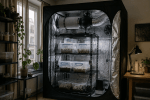
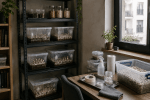
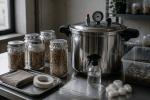

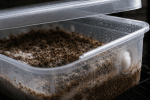

Indoor mushroom cultivation, at its core, is the management of environmental systems. The substrate type, fruiting chamber design, humidity source, airflow configuration, and temperature control method all interact as a single system. When any component falls outside acceptable parameters, the entire system responds. Understanding how these components relate to each other is the foundation of consistent indoor cultivation.
Environmental Consistency as the Central Principle
The goal of an indoor cultivation system is not to create a single perfect environment but to maintain target conditions within acceptable ranges over time. This requires both appropriate chamber design and monitoring. Design without monitoring is guesswork; monitoring without adequate design produces measurements you can observe but not correct.
Humidity Systems
Fruiting humidity requirements — typically 85–95% RH for most cultivated species — are significantly higher than standard indoor ambient conditions in Europe. Three mechanisms bridge this gap:
Passive humidity retention uses a well-sealed container to trap moisture evaporating from the substrate surface. Simple and effective for single-tub setups, it creates tension with airflow requirements that must be resolved through container design.
Active misting introduces fine water droplets into the fruiting environment. Manual misting with a spray bottle is adequate for single-tub setups (2–3 times daily); automated ultrasonic humidifiers connected to a digital hygrostat controller maintain target RH continuously in larger setups.
Perlite evaporation uses a hydrated perlite layer at the chamber base for passive humidity, commonly used in shotgun fruiting chambers where high passive airflow would otherwise over-dry the environment.
A digital hygrometer with min/max logging placed inside the fruiting environment is the minimum instrumentation for verifying humidity conditions. Bluetooth-connected data loggers allow continuous monitoring without physical chamber access.
Airflow Systems
Fresh air exchange (FAE) removes CO₂ produced by fungal respiration and replaces it with oxygen-containing ambient air. At CO₂ concentrations above approximately 1,000–2,000 ppm, fruiting bodies develop elongated, thin-stemmed morphology — a physiological response to presumed subterranean conditions.
Passive FAE: Holes drilled in the container sides and lid, filled with polyfill or filter material, allow diffusion-driven gas exchange without active airflow. CO₂, being denser than air, settles toward the chamber bottom and gradually diffuses outward. Adequate for most single-tub setups.
Fan-assisted FAE: A small USB-powered fan directed across the chamber entrance creates active gas exchange. Used in grow tent setups where multiple blocks require consistent fresh air. Airflow should cross (not blow directly onto) substrate surfaces to prevent desiccation.
HEPA filtration: HEPA filter material incorporated into FAE intake points removes airborne contaminants from incoming air. Standard in commercial cultivation; optional in advanced home setups.
Temperature Systems
For most cultivated species, the colonisation optimum is 22–26°C; the fruiting optimum is 18–24°C. Deviation in either direction reduces efficiency and increases contamination susceptibility.
In rooms maintaining consistent temperatures year-round, no active temperature management is required. In European winter conditions, a heat mat with thermostat controller positioned below or adjacent to the substrate provides localised heating. A probe thermometer at substrate level — not air level — is the accurate measurement point, as substrate can run several degrees cooler than ambient in cold rooms.
Sterile Workflow Systems
Contamination prevention requires systematic sterile technique from substrate preparation through inoculation into colonisation. Contamination introduced at any stage can compromise the entire grow cycle.
Substrate sterilisation: Grain-based substrates must be pressure-sterilised at 15 PSI / 121°C for 90–120 minutes. A pressure cooker rated to 15 PSI is the required equipment. Coir-based substrates can be pasteurised at 80–82°C for one hour.
Inoculation environment: All open substrate exposure should occur in a still-air box (SAB) or under a laminar flow hood. Surface sterilisation with 70% isopropyl alcohol, nitrile gloves, and face masks reduce operator-introduced contamination vectors.
Colonisation phase: Inoculated substrate should be stored sealed with limited access. Micropore tape over injection ports or filtered lids allows CO₂ to escape without permitting airborne contamination. Inspect for contamination indicators visually without opening.
Equipment: Indoor Cultivation Systems
- Pressure cooker (8–15L, 15 PSI) — substrate sterilisation
- Digital hygrometer with temperature display — environmental monitoring
- Monotub (15–50L polypropylene) — fruiting chamber
- HEPA or polyfill filter material — FAE hole filters
- Micropore tape — injection port sealing and FAE management
- Nitrile gloves — sterile workflow
- Heat mat with thermostat controller — substrate temperature management
- Ultrasonic humidifier with hygrostat — automated humidity management (advanced setups)
- Grow tent (60×60cm or larger) — multi-block fruiting environment
- Wire shelving — substrate organisation inside grow tent
System Interactions
No environmental variable operates in isolation. Humidity and airflow interact directly: increasing passive FAE reduces RH; reducing FAE to maintain RH allows CO₂ accumulation. Temperature affects colonisation rate and contamination susceptibility simultaneously. Sterile technique failures interact with substrate preparation quality.
Approaching the cultivation environment as an interconnected system — where changes to one variable have predictable effects on others — enables more effective diagnosis and more efficient optimisation across grow cycles.
Continue Reading
- Beginner Indoor Mushroom Cultivation: Environment, Equipment, and Common Failure Points
- Why Most Beginner Mushroom Grows Fail: 5 Environmental Mistakes to Avoid
- Best Beginner Mushroom Grow Kits in Europe: Environment, Ease of Use, and Setup Quality
Weekly Fungal Systems Briefing
Join the weekly fungal systems briefing for European cultivation updates, research summaries, and mushroom industry analysis.

