Category: Uncategorized
-
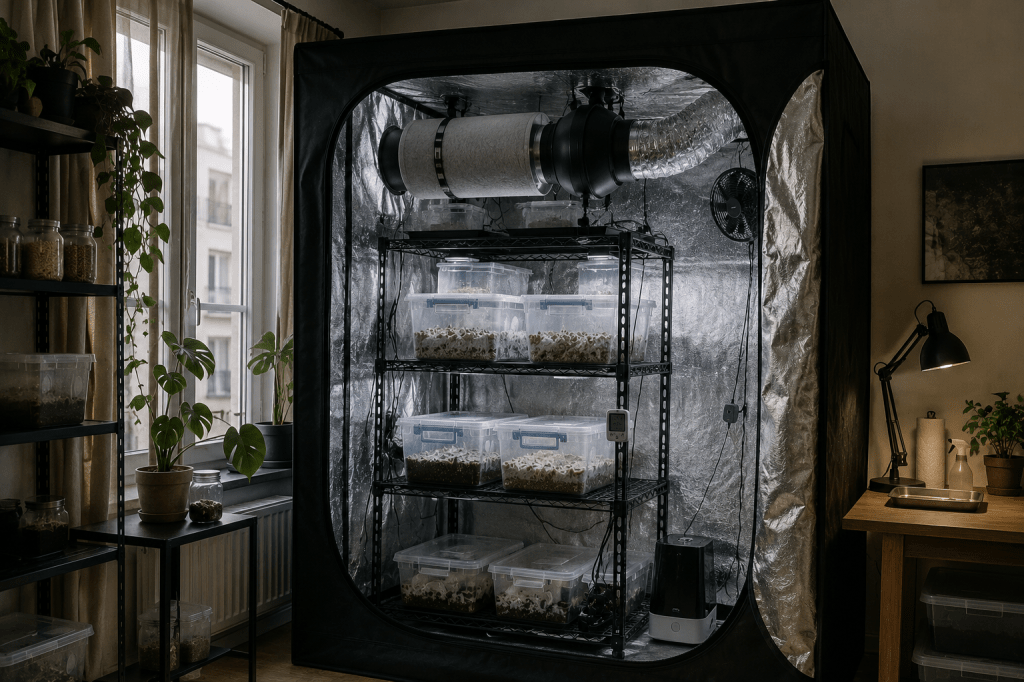
Most cultivators focus on tent size and miss the critical variables — ventilation port placement, humidity retention, and footprint compatibility. A framework for selecting a grow tent for mushroom cultivation, including EU-available options.
-

Apartment cultivation has different constraints than a dedicated grow space, and those constraints shape which equipment is worth buying and in what order. Space is limited, discretion matters, and there is no infrastructure to lean on — no dedicated electrical circuits, no drain, no ventilation system. The equipment needs to be minimal, functional, and physically…
-
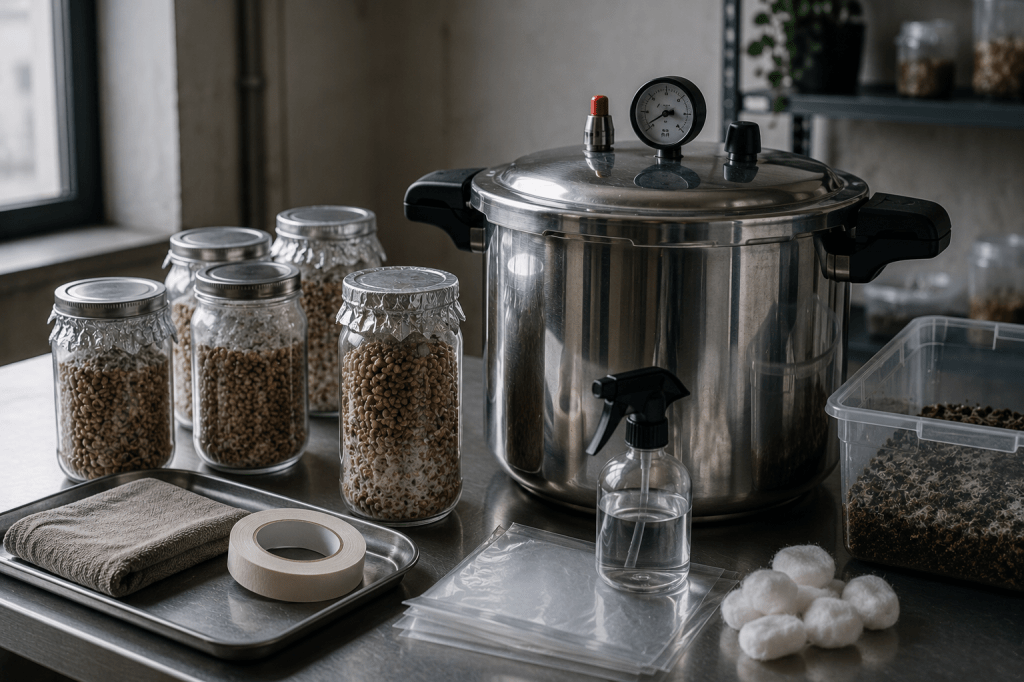
A framework for selecting a pressure cooker for mushroom grain sterilisation — key capacity thresholds, operating parameters, and EU-available options including WMF, Fissler, and Tefal.
-
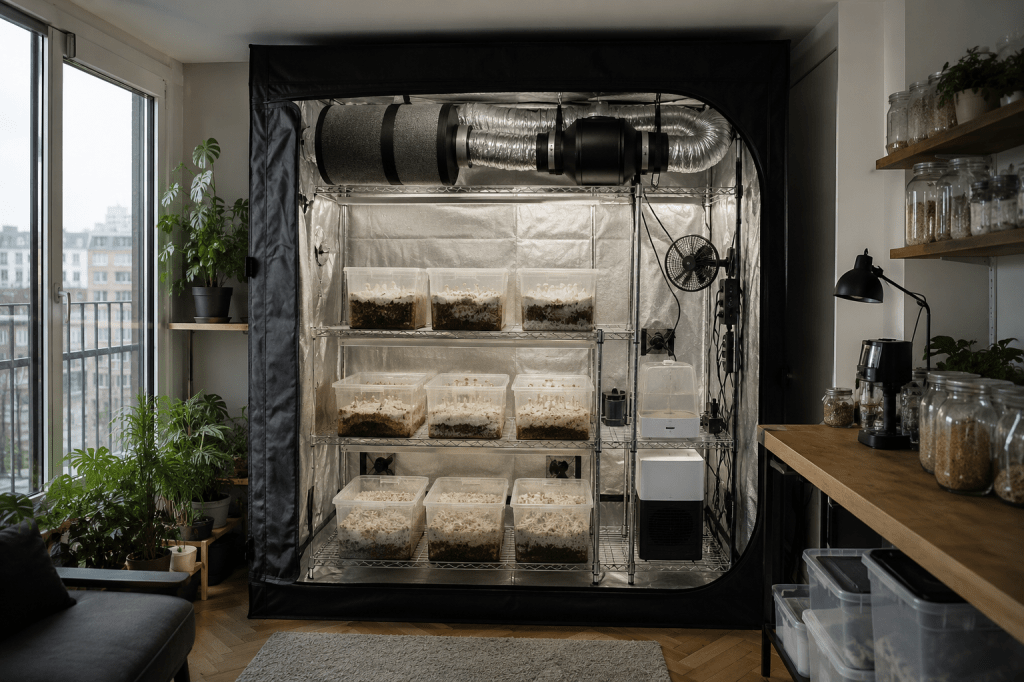
How to configure airflow in a grow tent for mushroom fruiting — fan positioning, intake and exhaust setup, and balancing humidity with gas exchange.
-
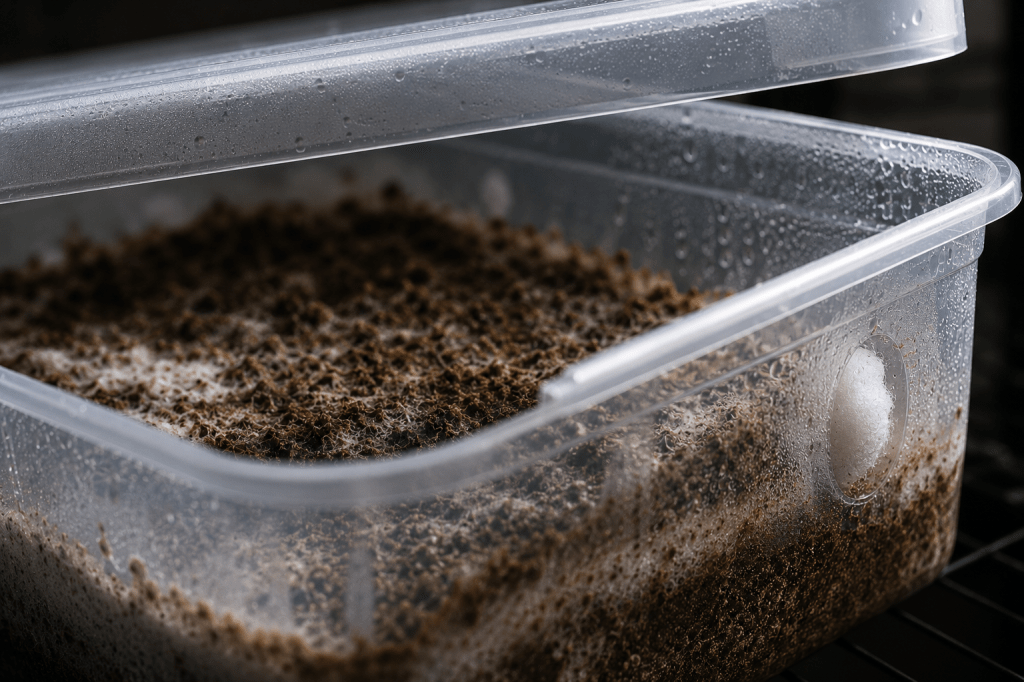
Humidity dropping in your fruiting chamber? This guide identifies the most common causes and explains targeted fixes without overcomplicating your setup.
-
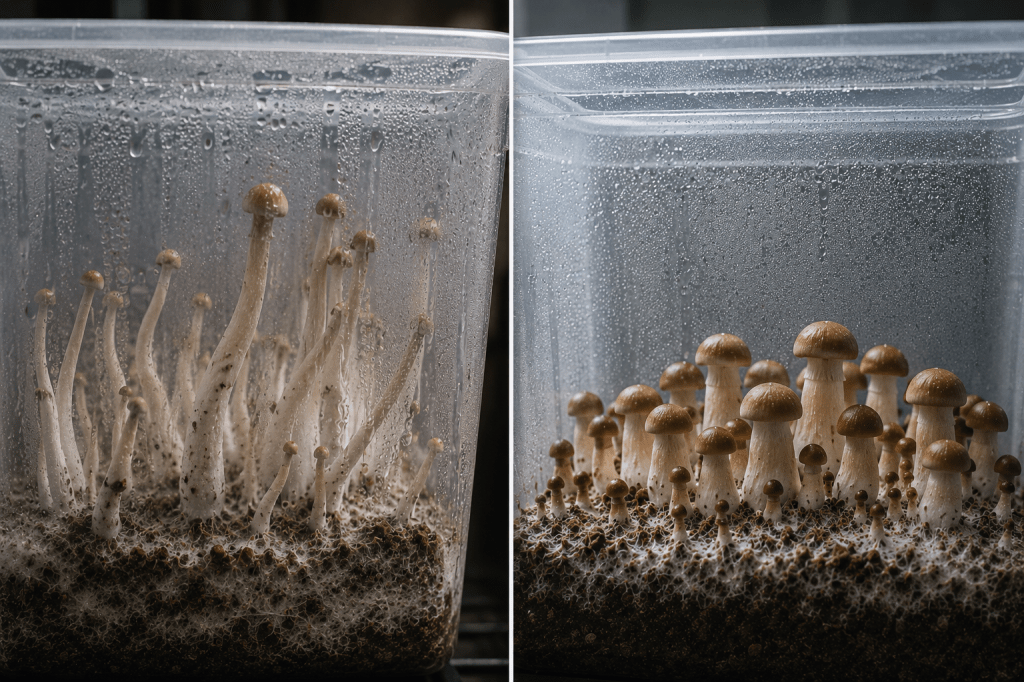
FAE vs passive exchange — what the terminology means, how each approach works in practice, and what actually determines fruiting chamber performance.
-
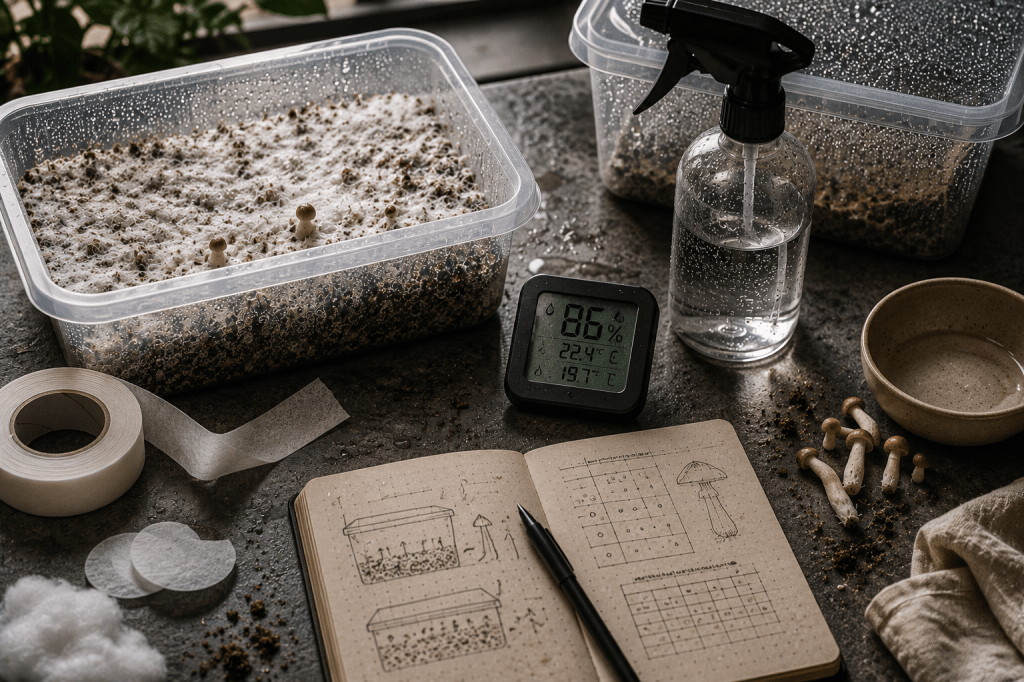
Most cultivators don’t need a humidifier to maintain fruiting humidity. This guide covers substrate moisture, passive evaporation, and manual misting approaches.
-
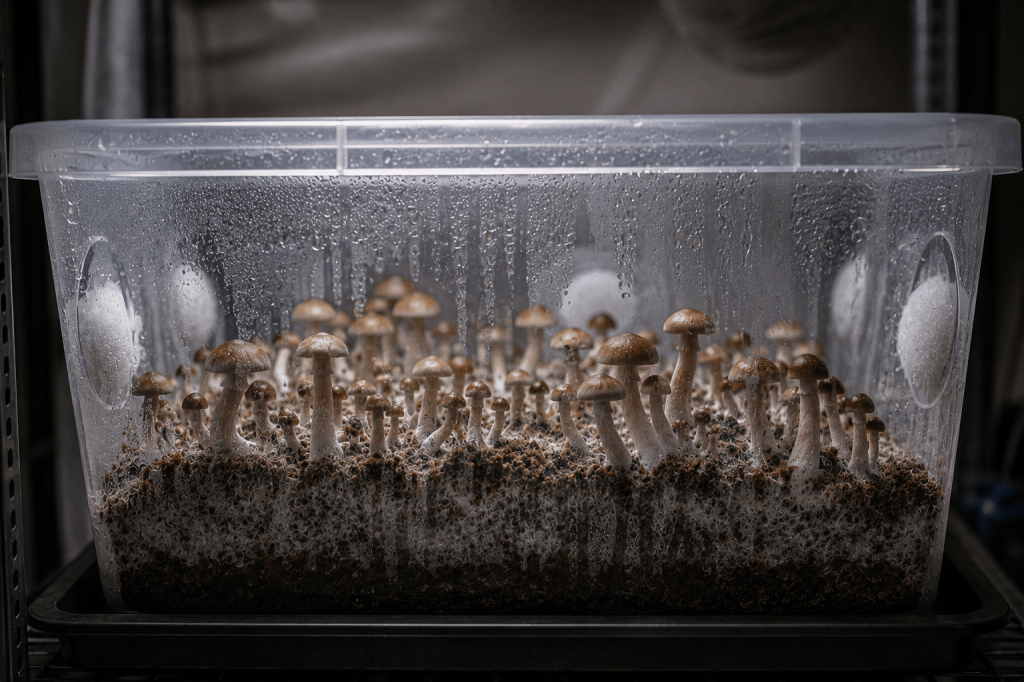
Mushrooms stall, abort, or never pin without adequate airflow. This guide explains what’s happening physiologically and how to identify the signs early.
-
Timing is one of the two most diagnostic variables in contamination analysis. When contamination becomes visible — relative to inoculation — indicates where in the cultivation process something failed. Combined with location, timing narrows the cause to a specific process variable. This reference maps contamination timing across three phases to their most probable causes, what…
-
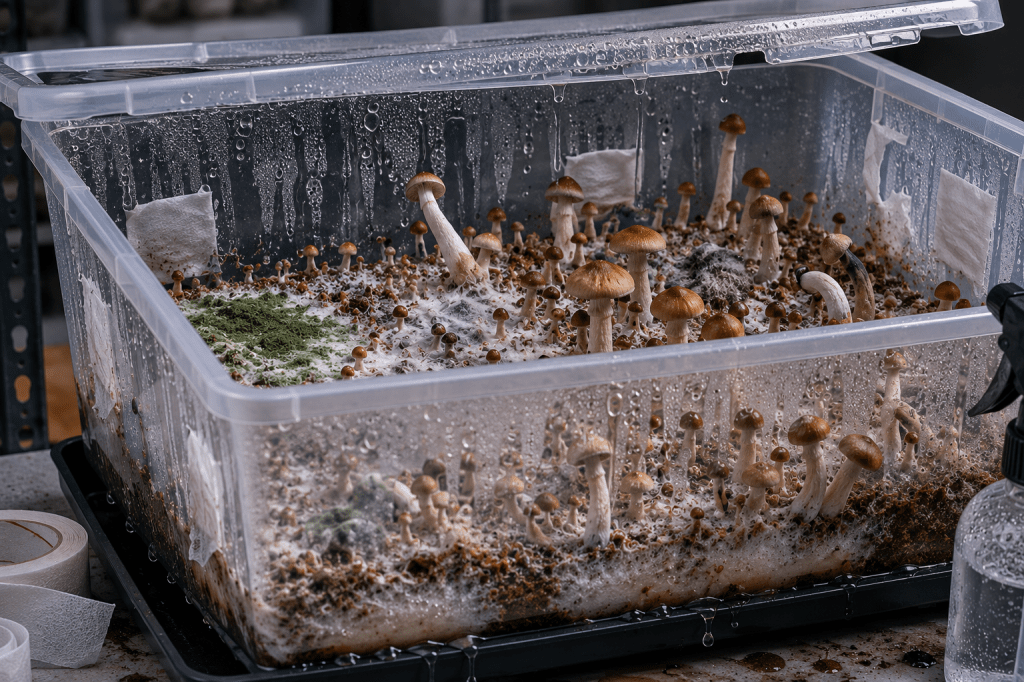
The monotub is one of the most forgiving cultivation formats for environmental management — large substrate mass buffers temperature and humidity, and the design allows for relatively passive gas exchange. But it is also a format where small setup mistakes compound across a longer colonisation period and produce contamination that is harder to attribute to…

