


Psilocybin-containing fungi are not a taxonomic group — they are a pharmacological one. Over 200 species across multiple genera have been confirmed to contain psilocybin or psilocin, distributed across a wide range of habitats, climate zones, and ecological niches. Understanding how different species adapt to their natural environments illuminates both their ecological roles and the specific substrate and climate conditions that indoor cultivation attempts to replicate.
The Ecology of Saprophytic Fungi
Most psilocybin-containing species are saprophytic — they obtain nutrients by decomposing dead organic matter. This places them in the decomposer guild of their ecosystems, where they play functional roles in nutrient cycling, particularly in the breakdown of lignocellulosic material in wood, straw, and leaf litter.
Saprophytic fungi compete with bacteria and other fungi for available substrate. The competitive pressure that psilocybin species face in moist, humid environments with abundant decaying organic material may have shaped the chemical compounds they produce, though the precise adaptive function of psilocybin production remains an open research question.
European Grassland Species: Psilocybe semilanceata
Psilocybe semilanceata — the liberty cap — is the most widely distributed psilocybin species in Europe. It grows in nutrient-poor, unimproved grasslands: pastures that have not been treated with synthetic fertilisers, upland meadows, and boggy margins. It is associated with the roots of grasses and fruits after the first cold rains of autumn when temperatures fall between 8–12°C.
Its concentration in Atlantic-influenced European regions — the UK, Ireland, Scandinavia, the Alps, and the Pyrenees — reflects its adaptation to cool, damp temperate climates with high autumn rainfall. Continental European climates with dry summers and cold winters that interrupt the moisture regime it requires support it only marginally.
Dung-Inhabiting Species: Psilocybe cubensis
Psilocybe cubensis is the most widely cultivated psilocybin species globally. In nature, it grows on bovine dung in subtropical and tropical environments — the Gulf Coast of the United States, Central America, South America, Southeast Asia — where it encounters warm temperatures (20–30°C), high humidity, and abundant nutrient-rich substrate.
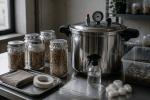
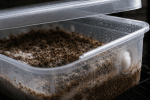
Its natural association with cattle dung reflects its adaptation to partially-digested plant material: high in nitrogen, moisture-retentive, and rich in the microbiota that partially breaks down cellulose. Indoor cultivation replicates this environment using grain-based substrates or bulk coir and straw mixes.
P. cubensis does not naturally occur in Europe. Its global prominence in cultivation is a product of human selection: it is robust, productive, and tolerates a wider range of cultivation conditions than more sensitive species.
Wood-Inhabiting Species: Psilocybe cyanescens and Psilocybe azurescens
Psilocybe cyanescens — the wavy cap — has spread significantly in Europe over the past several decades, associated with the increasing use of wood chip mulch in urban landscaping and garden beds. It is now documented in the UK, Germany, Switzerland, and Scandinavia, appearing in autumn on wood chip substrate in parks, gardens, and roadsides.
Its expansion represents an opportunistic ecological adaptation to a substrate type created by human activity. P. cyanescens colonises hardwood chips and persists as mycelium through summer before fruiting in cool, wet autumn conditions.
Psilocybe azurescens, native to the Pacific Northwest coast of North America, is among the most potent psilocybin species by concentration. It is adapted to cool, marine-influenced coastal temperate forests and grows on sandy soils containing decaying wood and debris. It has been introduced to several European locations.
Sclerotia-Forming Species: Psilocybe tampanensis
Psilocybe tampanensis produces both mushroom fruiting bodies and sclerotia — compact masses of hardened mycelium that function as dormancy-resistant storage organs. The sclerotia (marketed commercially as psilocybin truffles in the Netherlands) allow the organism to survive unfavourable conditions — drought, cold, nutrient depletion — before resuming growth when conditions improve.
This adaptation reflects the unpredictable moisture and temperature conditions of subtropical environments, where extended dry periods alternate with high-humidity rainfall. The sclerotia strategy provides a survival mechanism that fruiting-body-only species lack.
Climate Patterns and Habitat Requirements
Across psilocybin species, several ecological patterns are consistent:
- Moisture dependence: All known species require high ambient moisture for growth and fruiting, absent from arid environments except where localised moisture creates suitable microhabitats
- Temperature tolerance: Different species span different ranges, but none fruit well above 30°C or under frost. Fruiting is typically triggered by temperature drops following moisture availability
- Substrate specificity: Species show characteristic associations with particular substrate types — grass roots, cattle dung, wood chips, sandy soils — reflecting adaptations to specific nutrient profiles and competing microbial communities
- Seasonal fruiting: Temperate-zone species fruit predominantly in autumn; tropical and subtropical species may fruit year-round given sufficient moisture
Indoor Cultivation as Environmental Simulation
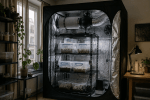
Understanding the natural habitat requirements of psilocybin species clarifies the logic behind indoor cultivation parameters. The humidity targets, temperature ranges, substrate compositions, and CO₂ management protocols in indoor cultivation are derived from the ecological conditions each species evolved in. Deviations produce predictable responses: lower RH reduces fruiting body development; temperatures outside the optimum slow colonisation; elevated CO₂ suppresses cap development.
This ecological framing — understanding cultivation as environmental simulation rather than a mechanical procedure — provides a more robust conceptual foundation for troubleshooting and optimisation than following procedural steps without understanding the underlying biology.
Continue Reading
- The Cultural and Scientific History of Psilocybin Research
- Beginner Indoor Mushroom Cultivation: Environment, Equipment, and Common Failure Points
- Indoor Mushroom Cultivation Systems: Environment, Sterility, and Monitoring Basics
Weekly Fungal Systems Briefing
Join the weekly fungal systems briefing for research summaries, cultivation systems analysis, and European mushroom industry updates.

