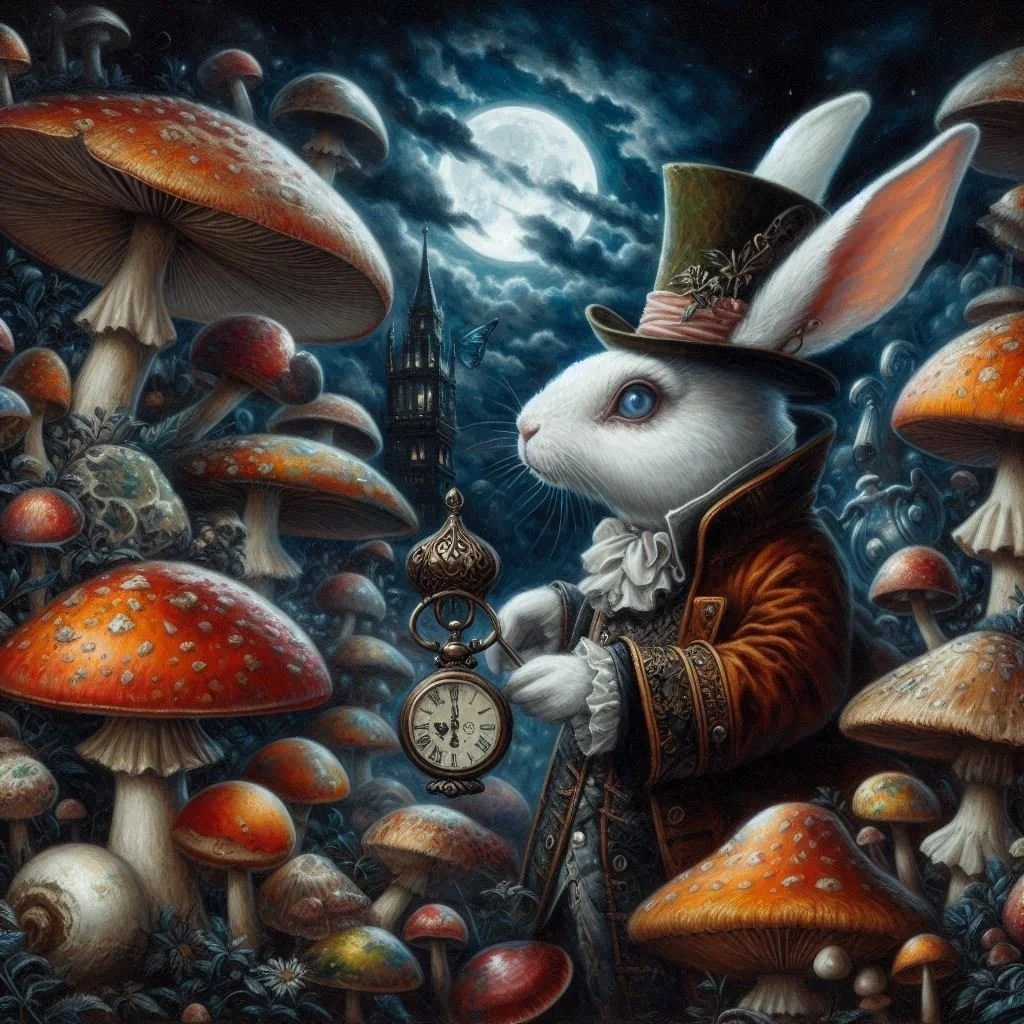
• How Psychedelic Fungi Influenced Film, Music, and Internet Culture

    Fungi and altered states have maintained a persistent presence in Western popular culture for over half a century. The imagery, symbolism, and conceptual frameworks associated with psychedelic experience have moved through film, music, visual art, and — in more recent decades — internet subcultures and digital aesthetics. Tracking this cultural presence reveals something about how societies process and contain ideas that occupy ambiguous moral and legal territory.


    Cinema: Psychedelic Experience as Film Language

    Cinema has engaged with altered states since at least the 1960s, when the psychedelic movement provided both subject matter and formal influence. The challenge of representing subjective perceptual distortion on screen generated a range of cinematic strategies that have become part of the vocabulary of experimental and mainstream filmmaking.

    Easy Rider (1969) included a peyote and LSD sequence that represented, at the time, a relatively unmediated attempt to translate subjective altered-state experience to film. The sequence used rapid editing, superimposition, and unconventional framing in a way that was stylistically influential on subsequent representations of drug experience in mainstream cinema.

    Ben Wheatley’s A Field in England (2013) is a more recent and formally rigorous engagement with psychedelic experience in film. Set during the English Civil War, the film depicts the consumption of foraged mushrooms and the psychological disintegration that follows, using black-and-white cinematography, long takes, and an unsettling sound design. Its approach is analytical rather than celebratory — it treats altered states as disturbing and disorienting rather than revelatory, which places it at some distance from the reverential tone of much psychedelic cinema.

    Brazilian director Gaspar Noé’s work — including Enter the Void (2009) and Climax (2018) — uses psychedelic and drug-induced states as a basis for extended formal experimentation with camera movement, light, and duration. These films treat altered states as a condition for exploring consciousness and perception rather than as narrative events, reflecting a distinctly post-countercultural aesthetic orientation.


    Music: From Psychedelic Rock to Electronic Culture

    The relationship between psychedelic substances and popular music was institutionalised in the 1960s. Psychedelic rock emerged in the mid-1960s as a genre explicitly associated with — and in many cases directly influenced by — LSD and other substances. Artists including The Beatles, Jefferson Airplane, The Doors, and Pink Floyd developed sonic vocabularies (extended improvisation, studio experimentation, dissonance, tape manipulation) that were framed as correlates or products of altered-state experience.

    The cultural legacy of this period structured subsequent engagements between music and altered states across several decades. Electronic dance music culture — particularly techno, rave, and their derivatives from the late 1980s onward — maintained a functional relationship between substance use and musical experience that was less explicitly symbolised but structurally central to the social context in which the music was consumed.

    Contemporary music genres including ambient, drone, and certain strains of experimental electronic music maintain aesthetic connections to altered-state experience without the explicit cultural framing of 1960s psychedelia. Artists such as Brian Eno, Boards of Canada, and Jon Hopkins have produced bodies of work that audiences and critics routinely describe in terms derived from altered-state phenomenology — expansiveness, timelessness, dissolution of boundaries — though the music itself is genre-agnostic with respect to substance use.


    Internet Culture: Fungi as Visual and Memetic Subject

    The internet has generated a distinctive relationship with fungal imagery and psychedelic aesthetics that differs in important respects from the countercultural contexts of the 1960s and 1970s. Online communities centred on cultivation, mycology, harm reduction, and psychedelic culture have developed largely in parallel with — and often at some critical distance from — the mainstream cultural and commercial framings of psychedelic substances.

    Reddit communities including r/unclebens, r/mushroomgrowers, r/microdosing, and r/RationalPsychonaut have developed norms of technical precision and harm-reduction orientation that represent a significant departure from the guru-inflected, transformation-focused discourse characteristic of 1960s psychedelic culture. These communities prioritise information quality, source citation, and nuanced discussion of adverse effects alongside positive experiences.

    Mycology as an aesthetic and intellectual interest has experienced substantial growth online, partly through the influence of Paul Stamets — whose work on fungal ecology, medicinal mushrooms, and mycoremediation has reached very large popular audiences through podcasts, documentary appearances, and social media. This mainstreaming of mycology as a subject of general interest has occurred partly independently of the psychedelic context, though the two domains overlap significantly in online discourse.


    Biohacker Culture and Psychedelic Aesthetics

    The integration of psychedelic substances — particularly psilocybin microdosing — into biohacker culture has generated a distinct aesthetic and discursive register. Biohacker communities tend to frame psychedelic substances in quantitative, performance-oriented terms: mood scores, productivity metrics, HRV data. The visual culture associated with this framing is deliberately non-countercultural: clinical, data-driven, oriented toward self-optimisation rather than liberation or transcendence.

    This represents a significant cultural recontextualisation. The same substances that were framed as tools for political and spiritual liberation in the 1960s are now discussed in contexts of executive performance, workplace cognition, and personal productivity. Whether this represents cultural normalisation, co-optation, or simply a different set of user populations with different orientations is a matter of ongoing cultural analysis.


    Underground Media and Harm Reduction Aesthetics

    Outside mainstream cultural channels, a substantial ecosystem of podcasts, YouTube channels, newsletters, and online communities produces content oriented toward harm reduction, cultivation education, and critical engagement with psychedelic culture. The aesthetic of this media tends toward the understated and informational: avoiding the mystical imagery and transformation narratives that characterise commercial wellness framing, and instead prioritising technical accuracy and epistemic humility.

    Platforms including Psymposia, Third Wave, and Chacruna Institute produce content that blends advocacy with research literacy, drawing on both academic sources and practitioner knowledge. This media occupies a different cultural niche than both the countercultural legacy press and the mainstream wellness media that has adopted microdosing as a product category.


    Fungal Ecology as Cultural Subject

    Merlin Sheldrake’s Entangled Life (2020) represented a significant moment in the cultural mainstreaming of fungal ecology. The book brought detailed scientific discussion of fungal biology, mycorrhizal networks, and interspecies communication to a very large popular audience, generating substantial media coverage and public interest in mycology that extended well beyond the psychedelic context.

    This fungal ecology framing — which emphasises interconnection, distributed intelligence, and the ecological importance of decomposer organisms — has influenced how fungi are represented in design, visual art, and popular media. Documentary productions including Fantastic Fungi (2019) combined Sheldrake’s ecological perspective with psychedelic research context, reaching audiences who may not have engaged with either subject through traditional channels.

    The resulting cultural moment — in which fungal biology, psychedelic research, and broader ecological consciousness have converged in public discourse — represents a distinctive feature of the early 2020s that is still developing. How durable this convergence proves, and whether it develops into lasting changes in how fungi are understood and represented in mainstream culture, remains to be seen.


    Continue Reading


    Weekly Fungal Systems Briefing

    Join the weekly fungal systems briefing for research summaries, cultivation systems analysis, and European mushroom industry updates.

    Read more: How Psychedelic Fungi Influenced Film, Music, and Internet Culture
  • Beginner Indoor Mushroom Cultivation: Environment, Equipment, and Common Failure Points

    Indoor mushroom cultivation is a systems problem. The species being grown, the substrate it colonises, the container it fruits in, and the environment surrounding all of that — temperature, humidity, airflow, light — function as an interconnected system. When any variable drifts outside its acceptable range, the entire system responds. Understanding cultivation this way from the start produces better outcomes than following step-by-step instructions disconnected from the underlying principles.

    This article covers the foundational elements of a beginner indoor cultivation environment: what to control, how to monitor it, what equipment is necessary versus optional, and where most setups fail.


    The Cultivation Environment: What You’re Actually Managing

    Indoor cultivation creates an artificial growing environment that must substitute for the ecological conditions a species evolved in. Each species has characteristic requirements — temperature ranges, humidity preferences, substrate composition, light exposure — derived from the habitats it naturally occupies. A cultivation setup that doesn’t meet these requirements will fail, regardless of technique quality or substrate quality.

    For most beginner-accessible cultivated species, the key environmental parameters are:

    • Substrate temperature during colonisation: 22–26°C for most species
    • Ambient temperature during fruiting: 18–24°C (species-dependent)
    • Relative humidity during fruiting: 85–95%
    • Fresh air exchange (FAE): Sufficient to prevent CO₂ accumulation above 1,000–2,000 ppm
    • Light: Indirect ambient light for directional cue; most species do not require high-intensity lighting

    These are target ranges, not fixed values. Actual conditions need to stay within these ranges consistently — which requires measurement, not assumption.


    Contamination: The Dominant Failure Mode

    Contamination — the growth of competing organisms (bacteria, moulds) on the substrate before or during fruiting — is responsible for the majority of beginner failures. It is also the most preventable category of failure, given adequate understanding of the sources.

    Contamination occurs when competing organisms reach the substrate in sufficient quantity to outcompete or damage the mycelium. Sources include airborne spores, unsterilised substrate, unsterilised tools, contaminated hands or gloves, breath, and previously contaminated equipment that was not properly cleaned.

    Sterile Environment Principles

    A sterile workflow does not require a laboratory. It requires consistent application of a small number of practices: surface disinfection with 70% isopropyl alcohol, glove use, limiting open-air exposure time during inoculation, and proper sterilisation of substrate before inoculation. Each practice addresses a specific contamination vector. Skipping any one of them re-introduces that vector.

    A still-air box (SAB) — a large clear container with arm holes cut into the sides, which allows work in a low-airflow environment — is a cost-effective solution for reducing airborne contamination during inoculation without the expense of a laminar flow hood.


    Substrate and Sterilisation

    Substrate is the growth medium — the material the mycelium colonises before fruiting. For most beginner-accessible species, common substrate components include grain (rye, wheat, oats, popcorn), brown rice flour mixed with vermiculite (BRF/verm), or bulk coir-based mixes for fruiting blocks.

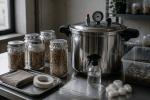
    All grain-based substrates must be sterilised before inoculation. Pressure cooking at 15 PSI / 121°C for 90–120 minutes eliminates heat-resistant spores and bacteria that survive boiling. A pressure cooker rated to 15 PSI is the essential piece of equipment for grain-based substrate preparation. Alternatives exist (pasteurisation for coir-based substrates, which have a lower contamination risk profile) but grain sterilisation requires pressure.

    Substrate water content (field capacity) affects colonisation speed and contamination risk. Too wet: anaerobic conditions favour bacterial contamination. Too dry: colonisation slows and stalls. Field capacity is typically tested by the squeeze test — a handful of prepared substrate squeezed firmly should release only a few drops of water.


    Fruiting Chamber Design

    The fruiting chamber is the environment in which colonised substrate is induced to produce fruiting bodies. Its design determines how well humidity, airflow, and temperature can be managed. For beginners, the most common approaches are:

    Monotub

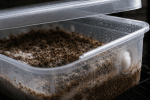
    A large polypropylene storage container (typically 15–50L) with holes drilled in the sides and lid for passive fresh air exchange (FAE). The holes are stuffed with polyfill or filter material to allow gas exchange while limiting airborne contamination entry. The monotub is placed in an ambient-temperature room, and humidity is maintained by misting. This is the most common beginner setup and scales well to multiple grows.

    Shotgun Fruiting Chamber (SGFC)

    A clear container perforated on all six sides with small holes (typically 6mm on a 2-inch grid pattern), with perlite at the base for passive humidity. The SGFC provides good airflow but requires more active management of humidity since its passive exchange rate is high. Better suited to environments with naturally higher ambient RH.

    Martha Tent or Grow Tent

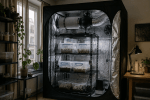
    A small greenhouse-style tent (common sizes 60×60×140cm to 120×60×180cm) with an ultrasonic humidifier connected to a hygrostat controller, which maintains target RH automatically. This setup requires more equipment investment but significantly reduces active maintenance. It scales to multi-block grows and provides more consistent environmental control than passive approaches.


    Humidity Management

    Fruiting humidity requirements (85–95% RH) are significantly higher than typical indoor ambient humidity in most European regions, which ranges from 35–60% in centrally-heated spaces. This gap must be actively bridged by the fruiting chamber design.

    Manual misting with a clean spray bottle is adequate for single-tub setups: misting 2–3 times daily onto the chamber walls (not directly onto the substrate surface) introduces enough moisture to maintain target RH in a well-sealed monotub. For larger setups or environments with very low ambient humidity, an ultrasonic humidifier connected to a digital hygrostat controller automates this process.

    Measurement is essential. A digital hygrometer placed inside the fruiting chamber provides accurate readings and reveals whether misting frequency is maintaining target RH or falling short. Estimating by feel is insufficient for consistent results.


    Airflow and CO₂ Management

    Mushrooms produce CO₂ as a byproduct of respiration. In a sealed environment, CO₂ accumulates and suppresses normal fruiting body development — producing elongated, thin-stemmed growth with underdeveloped caps. Fresh air exchange removes accumulated CO₂ and introduces oxygen.

    In a monotub with passive FAE holes, gas exchange occurs naturally through the filter patches. In a sealed container, manual fanning is required: opening the lid and fanning gently 2–3 times daily for 10–15 seconds refreshes the atmosphere without causing significant humidity loss.

    The tension in fruiting chamber design is between maintaining humidity (which favours sealed environments) and maintaining adequate airflow (which favours open or perforated environments). Most successful beginner chamber designs address both by incorporating filter-stuffed FAE holes that allow passive gas exchange while limiting moisture loss and contamination entry.


    Temperature Management

    Most cultivated species colonise fastest between 22–26°C and fruit at slightly lower temperatures, typically 18–24°C. In European homes, year-round temperature consistency is uncommon — rooms often vary between 16–24°C depending on season, heating system, and room position.

    For setups in cooler environments, a heat mat with thermostat controller positioned below or adjacent to the substrate provides consistent warmth without the risk of overheating. A probe thermometer placed at substrate level — not air level — is the accurate measurement point, as substrate can run several degrees cooler than ambient air in cold rooms.


    Core Equipment List for a Beginner Setup

    A functional single-tub beginner cultivation setup requires a modest equipment investment. The following items cover substrate preparation, sterilisation, inoculation, and fruiting environment management:

    Optional but useful for expanding beyond a single grow: a grow tent, ultrasonic humidifier, and digital hygrostat controller allow multiple blocks to be managed simultaneously with reduced active intervention.


    Where Beginner Setups Most Often Fail

    Based on the most common failure patterns in beginner indoor cultivation, the following are the highest-risk points:

    • Inoculation environment: Working in uncontrolled airflow or with contaminated tools during inoculation introduces contamination before colonisation begins
    • Substrate sterilisation: Inadequate pressure cooking time or insufficient PSI leaves heat-resistant spores viable in grain substrate
    • Humidity measurement: Assuming humidity is adequate without instrumentation leads to operating at suboptimal RH without knowing it
    • FAE design: Fully sealed containers without FAE holes cause CO₂ accumulation that arrests or distorts pin development
    • Temperature consistency: Night-time temperature drops in unheated rooms slow colonisation and can halt pinning, which appears as a failure but is a thermal limitation

    The Case for Starting with a Grow Kit

    For beginners who want to observe the fruiting process and develop observational skills before investing in the full substrate preparation workflow, a pre-colonised grow kit removes the colonisation phase entirely. It reduces equipment requirements to a fruiting chamber and misting bottle, and shifts the focus to fruiting environment management — which is, ultimately, where most of the relevant skill development occurs.

    A successful kit grow develops the environmental awareness — how humidity feels at 90% versus 70%, how CO₂ accumulation affects pin morphology, how temperature shifts affect growth speed — that makes the transition to substrate-level work significantly easier.


    Continue Reading


    Weekly Fungal Systems Briefing

    Join the weekly fungal systems briefing for European cultivation updates, research summaries, and mushroom industry analysis.

    Read more: Beginner Indoor Mushroom Cultivation: Environment, Equipment, and Common Failure Points
  • Why Microdosing Became Popular in European Wellness and Biohacker Culture

    Over the past decade, the practice of consuming sub-perceptual quantities of psilocybin — commonly referred to as microdosing — has moved from fringe online communities into wellness media, startup culture, and mainstream public discourse. In Europe, this shift has been particularly visible in cities with established biohacker, tech, and alternative wellness communities: Amsterdam, Berlin, Copenhagen, and Zurich have all seen notable growth in microdosing discussions, retreats, and semi-underground communities.

    This piece examines how the microdosing trend developed, what drives its appeal, how it has intersected with European wellness culture, and why it remains scientifically and legally contested.


    From Underground Practitioner Reports to Mainstream Media

    The modern microdosing trend can be traced in large part to James Fadiman, an American psychologist who began collecting self-report data from microdosers in the early 2010s and published The Psychedelic Explorer’s Guide in 2011. Fadiman’s systematisation of practitioner reports — compiled through an informal research protocol rather than a clinical trial — provided the first organised body of anecdotal evidence and attracted significant media attention.

    By 2015–2016, microdosing had become a documented trend in Silicon Valley, reported in publications including Rolling Stone, Forbes, and the New Yorker. The framing in US tech culture was primarily productivity-oriented: microdosing as a tool for enhanced focus, creativity, and problem-solving. This framing influenced how the practice was subsequently discussed in European contexts, though European adoption tended to blend productivity and wellness angles more closely than the US tech narrative alone.


    The European Biohacker Context

    Biohacking — the practice of using self-experimentation, nutritional supplementation, behavioural protocols, and emerging biotechnology to optimise physical and cognitive performance — has established communities in several European cities. Scandinavian countries in particular have an active biohacking scene, with communities in Stockholm and Helsinki organising regular meetups and experimentation groups.

    Within these communities, microdosing became one of several experimental cognitive enhancement strategies discussed alongside nootropics, intermittent fasting, sleep optimisation protocols, and wearable monitoring technology. The biohacker framing was notably different from both the therapeutic framing of clinical research and the spiritual framing of traditional psychedelic use: it treated microdosing as a performance variable to be tracked and optimised rather than as a therapeutic intervention or spiritual practice.

    This quantification orientation — tracking mood scores, productivity metrics, sleep quality, and HRV data alongside microdosing schedules — represented a distinct cultural adaptation of psychedelic practice. It also generated more structured self-report data than purely anecdotal accounts, though this data remained uncontrolled and difficult to compare across individuals.


    The Wellness Industry Integration

    Parallel to the biohacker community, microdosing became integrated into European wellness culture through a different pathway: mental health and burnout recovery. In countries with high rates of workplace burnout — particularly the Netherlands, Germany, and the UK — microdosing appeared in wellness media as a potential tool for managing stress, improving emotional regulation, and recovering from burnout.

    Dutch retreat operators in particular developed a market segment around supervised psilocybin truffle experiences (legal in the Netherlands) combined with therapeutic support, meditation, and integration coaching. These retreats attracted participants from across Europe, many of whom were seeking alternatives to pharmaceutical approaches to anxiety and depression.

    The wellness framing positioned microdosing within an existing cultural vocabulary — self-care, mindfulness, somatic work, integrative health — that had already been normalised in European wellness consumer markets. This framing was arguably more culturally legible to a mainstream European audience than the productivity-focused tech narrative.


    The Scientific Evidence Base: What It Actually Shows

    Despite significant public interest, the scientific evidence base for microdosing remains limited and contested. The methodological challenges are considerable: microdosing research is difficult to conduct under proper controlled conditions because participants can often detect whether they have received an active dose, compromising blinding; self-selection into microdosing research skews toward individuals who already believe in its benefits; and the optimal dose for sub-perceptual effects varies significantly between individuals.

    A 2021 study by Szigeti et al., published in eLife, used a self-blinded citizen science design to compare microdosing to placebo. The study found improvements in psychological wellbeing and perceived cognitive functioning, but also found that the improvements were largely attributable to expectation effects — participants who believed they were taking an active dose reported benefits regardless of whether they actually received one. The authors concluded that expectancy, rather than pharmacological activity, may account for a significant proportion of self-reported microdosing benefits.

    A 2022 double-blind placebo-controlled trial by Szigeti and colleagues at Imperial College London found modest positive effects on mood and wellbeing in some measures but did not find significant cognitive enhancement effects. Larger, more rigorous trials are ongoing at several institutions.

    The placebo debate does not necessarily invalidate microdosing as a practice for individuals who find it helpful — placebo effects can produce genuine subjective improvements — but it does complicate claims about specific pharmacological mechanisms and challenges the confident performance-enhancement narrative that drove early cultural adoption.


    Regulatory Differences Across Europe

    European regulatory frameworks for psilocybin vary considerably, creating a patchwork of legal environments that shapes where and how microdosing culture develops.

    The Netherlands occupies a unique position: psilocybin-containing truffles (Psilocybe tampanensis and related species) were not included in the 1976 drug scheduling that criminalised mushrooms, and remain legally available for purchase and consumption. This has made the Netherlands the de facto centre of legal psilocybin access in Europe, supporting a substantial truffle retail market and a growing retreat industry.

    In the Czech Republic, possession of small quantities of psychedelic substances is decriminalised, though not legally permitted. In Germany, psilocybin was rescheduled in 2024 to permit its use in controlled clinical research settings, though recreational or personal use remains prohibited. Switzerland has permitted psilocybin research under compassionate use frameworks, with several institutions conducting or planning trials.

    The UK maintains one of the stricter regulatory positions in Europe, with psilocybin classified as a Class A controlled substance and no legal pathway for non-clinical access. This has not prevented the development of a microdosing community in the UK, but has limited the ability of that community to organise publicly or commercially.


    Media Coverage and Cultural Saturation

    By 2022–2023, microdosing had received coverage in major European publications including Der Spiegel, Le Monde, The Guardian, and NRC Handelsblad, among others. The tone of coverage shifted noticeably over this period: early coverage was predominantly novelty-focused and sometimes credulous; later coverage increasingly engaged with the scientific uncertainty, the placebo debate, and the regulatory complexity.

    Podcasts became a significant distribution channel for microdosing discourse in Europe, with several Dutch, German, and Scandinavian podcasts dedicated to psychedelic culture and microdosing specifically building substantial audiences. This podcasting ecosystem served as an information layer operating largely outside mainstream media, where more detailed and practically-oriented discussion occurred.

    Social media played a dual role: Instagram and TikTok content promoted microdosing in wellness aesthetics, while Reddit communities (particularly r/microdosing, which has over 200,000 members) provided a more mixed and critically-engaged discussion environment where negative experiences, protocol failures, and research limitations were regularly discussed alongside positive reports.


    The Microdosing Industry and Commercial Interests

    Alongside the cultural trend, a commercial ecosystem has emerged. In the Netherlands, truffle retailers market their products explicitly to microdosers, with product lines tailored to sub-perceptual dosing and integration guides included with purchases. Coaching and consulting services have emerged across several European countries, offering microdosing guidance, integration support, and community access for monthly fees.

    This commercialisation has generated criticism from both research-oriented and harm-reduction communities. The concern is that commercial framing reinforces benefit narratives while systematically de-emphasising contraindications, adverse effects, and the uncertainty of the evidence base. Individuals with personal or family histories of psychosis, certain medication interactions (particularly SSRIs, which interact with psilocybin’s serotonergic mechanism), and other risk factors may not receive adequate information in commercial microdosing contexts.


    Where the Trend Stands Now

    Microdosing occupies an unusual position in 2025: it is culturally mainstream in the sense that most informed Europeans have heard of it and can identify its basic premise, but it remains scientifically underdetermined and legally irregular across most of the continent. The gap between cultural saturation and evidentiary certainty is larger than popular coverage typically acknowledges.

    The next several years of clinical research — including ongoing trials at Imperial College London, Johns Hopkins, and several European institutions — will likely clarify which aspects of the reported benefits are pharmacologically reliable versus expectancy-driven, and will inform regulatory discussions currently underway in Switzerland, Germany, and the UK.

    For now, the microdosing trend is best understood as a cultural phenomenon shaped by the convergence of biohacker optimisation culture, wellness industry framing, loosening public attitudes toward psychedelics, and a genuine (if still early-stage) scientific research programme. Its durability will depend significantly on how that research programme develops over the next decade.


    Continue Reading


    Weekly Fungal Systems Briefing

    Join the weekly fungal systems briefing for European research updates, cultivation systems, and mushroom culture analysis.

    Read more: Why Microdosing Became Popular in European Wellness and Biohacker Culture
  • The Cultural and Scientific History of Psilocybin Research

    Psilocybin has a documented history spanning thousands of years of ceremonial use, a brief and intense period of Western scientific investigation in the mid-twentieth century, several decades of prohibition and research suppression, and a contemporary renaissance driven by clinical psychiatry and neuroscience. Understanding this arc — and the political and institutional forces that shaped it — is essential context for evaluating the current state of psilocybin research.


    Pre-Colonial Ceremonial Use in Mesoamerica

    Archaeological and ethnohistorical evidence indicates that psilocybin-containing fungi were used in ceremonial contexts across multiple Mesoamerican cultures for at least several thousand years prior to European contact. Rock paintings at the Tassili n’Ajjer site in Algeria, dated to approximately 7,000 years ago, have been interpreted by some researchers as depicting mushroom imagery, though this interpretation remains debated.

    More directly documented is the use of teonanácatl (“flesh of the gods” in Nahuatl) in Aztec and Mazatec ceremonial practice. Spanish missionaries in the sixteenth century documented these practices and attempted to suppress them, viewing them as incompatible with Christian conversion. Despite active suppression, the ceremonial use of psilocybin mushrooms survived in isolated Mazatec communities in the mountains of Oaxaca, Mexico — most notably through the curandera tradition that would eventually attract Western attention in the twentieth century.


    Western Discovery and the Wasson Expedition (1955–1957)

    Western scientific interest in psilocybin mushrooms was triggered largely by a 1957 Life magazine article by R. Gordon Wasson, a New York banker and amateur ethnomycologist, who documented his participation in a Mazatec mushroom ceremony conducted by curandera María Sabina in Huautla de Jiménez, Mexico. The article, read by several million people, brought psilocybin mushrooms to mainstream Western attention for the first time.

    Wasson had brought mushroom samples to Albert Hofmann at Sandoz Laboratories in Basel — the same chemist who had synthesised LSD in 1938. In 1958, Hofmann successfully isolated psilocybin and psilocin from Psilocybe mexicana, enabling their synthesis and pharmacological investigation. Sandoz began producing synthetic psilocybin and distributing it to researchers under the brand name Indocybin.


    The First Research Wave: 1958–1971

    The availability of synthetic psilocybin in the late 1950s and early 1960s produced a burst of clinical and psychological research. Researchers at major institutions including Harvard, the National Institute of Mental Health, and several European universities investigated psilocybin’s potential applications in psychotherapy, particularly for treatment of alcoholism, anxiety in terminal illness, and personality disorders.

    At Harvard, Timothy Leary and Richard Alpert (later Ram Dass) conducted the Harvard Psilocybin Project beginning in 1960, administering psilocybin to students and intellectuals and documenting subjective effects. Their research drew significant criticism for methodological inadequacy and boundary violations, and both were dismissed from Harvard in 1963. Leary’s subsequent public advocacy for psychedelic drug use — “turn on, tune in, drop out” — became politically radioactive and contributed to regulatory backlash that affected all psychedelic research.

    Despite this, legitimate research continued into the late 1960s. The Spring Grove research program in Maryland conducted controlled studies of psilocybin and LSD in patients with terminal cancer, alcoholism, and neurosis, producing some of the most methodologically serious work of the era. These studies found significant therapeutic effects in many participants.


    Prohibition and the Research Hiatus: 1971–1990

    The 1970 Controlled Substances Act in the United States classified psilocybin as a Schedule I substance — indicating no accepted medical use and high potential for abuse. Similar scheduling followed in the UK (1971) and across most European countries through the 1971 UN Convention on Psychotropic Substances, to which most European states became parties.

    Schedule I classification effectively ended clinical research by making institutional approval for human studies nearly impossible to obtain, creating liability concerns for researchers and institutions, and cutting off pharmaceutical company funding. Research on psilocybin essentially ceased for approximately two decades.

    The research that did occur in this period was largely observational and survey-based — documenting naturalistic use patterns, adverse event rates, and cultural practices — rather than controlled clinical investigation. Rick Strassman’s DMT research at the University of New Mexico in the early 1990s was one of the first FDA-approved psychedelic studies since prohibition, and represented a partial reopening of the regulatory environment.


    The Research Renaissance: 2000–Present

    The modern research renaissance in psilocybin began with a handful of pioneering studies in the early 2000s. Roland Griffiths at Johns Hopkins University published a landmark 2006 study in Psychopharmacology demonstrating that psilocybin could occasion mystical-type experiences with lasting positive effects on wellbeing and life satisfaction in healthy volunteers. This study, conducted with rigorous methodology and institutional oversight, demonstrated that controlled human psilocybin research was feasible and began rebuilding scientific credibility for the field.

    Simultaneously, Robin Carhart-Harris and colleagues at Imperial College London began a series of neuroimaging studies examining the neural mechanisms of psilocybin action, producing influential work on DMN activity, entropy, and the neuroscience of psychedelic states. This work provided mechanistic grounding for therapeutic hypotheses and attracted neuroscientific interest beyond traditional pharmacology and psychiatry.

    By the mid-2010s, clinical research had expanded significantly. Studies at Johns Hopkins, NYU, Imperial College London, and other institutions examined psilocybin-assisted therapy for treatment-resistant depression, end-of-life anxiety, tobacco addiction, and alcohol use disorder. Several produced effect sizes that exceeded those of approved pharmacological treatments for the same conditions.


    European Research Developments

    European institutions have been significant contributors to the contemporary research programme. COMPASS Pathways, a UK-based mental health care company, received FDA Breakthrough Therapy designation for its COMP360 psilocybin therapy program for treatment-resistant depression in 2018 and completed a Phase 2b trial published in the New England Journal of Medicine in 2022.

    The University of Basel in Switzerland has a long history of psychedelic research, connecting to Albert Hofmann’s original work, and continues to host pharmacological and clinical investigations. In Germany, regulatory changes in 2024 permitted psilocybin use in authorised clinical research settings for the first time since the early 1970s. Several universities are developing research programmes in response.

    The Netherlands maintains a unique position: psilocybin-containing truffles were not included in the 1976 scheduling that criminalised mushrooms and remain legally available, supporting a substantial research-adjacent commercial market and attracting researchers studying naturalistic use patterns.


    Regulatory Timeline: Key Dates

    • 1958: Albert Hofmann isolates psilocybin at Sandoz Laboratories, Basel
    • 1960: Harvard Psilocybin Project begins under Timothy Leary and Richard Alpert
    • 1970: Psilocybin classified Schedule I under the US Controlled Substances Act
    • 1971: UN Convention on Psychotropic Substances; psilocybin scheduled in most European countries
    • 1976: Netherlands schedules psilocybin mushrooms; psilocybin truffles inadvertently excluded
    • 1994: First FDA-approved psychedelic research since prohibition (Rick Strassman, DMT)
    • 2006: Griffiths et al. publish landmark psilocybin study at Johns Hopkins
    • 2018: FDA grants Breakthrough Therapy designation to COMPASS Pathways psilocybin programme
    • 2021: Oregon becomes first US state to legalise supervised psilocybin therapy (implemented 2023)
    • 2022: COMPASS Phase 2b trial results published in NEJM; Australia announces therapeutic psilocybin approval (effective 2023)
    • 2024: Germany permits psilocybin in authorised clinical research settings

    Cultural Transitions

    The public framing of psilocybin has undergone significant transitions across this history. In indigenous Mesoamerican contexts, it was a religious sacrament embedded in specific ceremonial and healing traditions. In 1960s Western culture, it became associated with countercultural rebellion and political opposition to established institutions — an association that contributed directly to regulatory backlash.

    In the contemporary period, psilocybin has been progressively reframed as a medical research subject and potential psychiatric treatment — a shift driven deliberately by researchers who recognised that the countercultural associations of the 1960s had damaged the scientific credibility of the field. The current research programme has been careful to maintain clinical and institutional distance from the recreational and spiritual framing that characterises other segments of psychedelic culture.

    Whether this reframing proves durable as research expands and regulatory access broadens will depend significantly on how mainstream clinical psychiatry, regulatory agencies, and the general public integrate psilocybin into existing frameworks for understanding medicine, mental health, and altered states.


    Continue Reading


    Weekly Fungal Systems Briefing

    Join the weekly fungal systems briefing for research summaries, cultivation systems analysis, and European mushroom industry updates.

    Read more: The Cultural and Scientific History of Psilocybin Research
  • Indoor Mushroom Cultivation Systems: Environment, Sterility, and Monitoring Basics

    Indoor mushroom cultivation, at its core, is the management of environmental systems. The substrate type, fruiting chamber design, humidity source, airflow configuration, and temperature control method all interact as a single system. When any component falls outside acceptable parameters, the entire system responds. Understanding how these components relate to each other is the foundation of consistent indoor cultivation.


    Environmental Consistency as the Central Principle

    The goal of an indoor cultivation system is not to create a single perfect environment but to maintain target conditions within acceptable ranges over time. This requires both appropriate chamber design and monitoring. Design without monitoring is guesswork; monitoring without adequate design produces measurements you can observe but not correct.


    Humidity Systems

    Fruiting humidity requirements — typically 85–95% RH for most cultivated species — are significantly higher than standard indoor ambient conditions in Europe. Three mechanisms bridge this gap:

    Passive humidity retention uses a well-sealed container to trap moisture evaporating from the substrate surface. Simple and effective for single-tub setups, it creates tension with airflow requirements that must be resolved through container design.

    Active misting introduces fine water droplets into the fruiting environment. Manual misting with a spray bottle is adequate for single-tub setups (2–3 times daily); automated ultrasonic humidifiers connected to a digital hygrostat controller maintain target RH continuously in larger setups.

    Perlite evaporation uses a hydrated perlite layer at the chamber base for passive humidity, commonly used in shotgun fruiting chambers where high passive airflow would otherwise over-dry the environment.

    A digital hygrometer with min/max logging placed inside the fruiting environment is the minimum instrumentation for verifying humidity conditions. Bluetooth-connected data loggers allow continuous monitoring without physical chamber access.


    Airflow Systems

    Fresh air exchange (FAE) removes CO₂ produced by fungal respiration and replaces it with oxygen-containing ambient air. At CO₂ concentrations above approximately 1,000–2,000 ppm, fruiting bodies develop elongated, thin-stemmed morphology — a physiological response to presumed subterranean conditions.

    Passive FAE: Holes drilled in the container sides and lid, filled with polyfill or filter material, allow diffusion-driven gas exchange without active airflow. CO₂, being denser than air, settles toward the chamber bottom and gradually diffuses outward. Adequate for most single-tub setups.

    Fan-assisted FAE: A small USB-powered fan directed across the chamber entrance creates active gas exchange. Used in grow tent setups where multiple blocks require consistent fresh air. Airflow should cross (not blow directly onto) substrate surfaces to prevent desiccation.

    HEPA filtration: HEPA filter material incorporated into FAE intake points removes airborne contaminants from incoming air. Standard in commercial cultivation; optional in advanced home setups.


    Temperature Systems

    For most cultivated species, the colonisation optimum is 22–26°C; the fruiting optimum is 18–24°C. Deviation in either direction reduces efficiency and increases contamination susceptibility.

    In rooms maintaining consistent temperatures year-round, no active temperature management is required. In European winter conditions, a heat mat with thermostat controller positioned below or adjacent to the substrate provides localised heating. A probe thermometer at substrate level — not air level — is the accurate measurement point, as substrate can run several degrees cooler than ambient in cold rooms.


    Sterile Workflow Systems

    Contamination prevention requires systematic sterile technique from substrate preparation through inoculation into colonisation. Contamination introduced at any stage can compromise the entire grow cycle.

    Substrate sterilisation: Grain-based substrates must be pressure-sterilised at 15 PSI / 121°C for 90–120 minutes. A pressure cooker rated to 15 PSI is the required equipment. Coir-based substrates can be pasteurised at 80–82°C for one hour.

    Inoculation environment: All open substrate exposure should occur in a still-air box (SAB) or under a laminar flow hood. Surface sterilisation with 70% isopropyl alcohol, nitrile gloves, and face masks reduce operator-introduced contamination vectors.

    Colonisation phase: Inoculated substrate should be stored sealed with limited access. Micropore tape over injection ports or filtered lids allows CO₂ to escape without permitting airborne contamination. Inspect for contamination indicators visually without opening.


    Equipment: Indoor Cultivation Systems


    System Interactions

    No environmental variable operates in isolation. Humidity and airflow interact directly: increasing passive FAE reduces RH; reducing FAE to maintain RH allows CO₂ accumulation. Temperature affects colonisation rate and contamination susceptibility simultaneously. Sterile technique failures interact with substrate preparation quality.

    Approaching the cultivation environment as an interconnected system — where changes to one variable have predictable effects on others — enables more effective diagnosis and more efficient optimisation across grow cycles.


    Continue Reading


    Weekly Fungal Systems Briefing

    Join the weekly fungal systems briefing for European cultivation updates, research summaries, and mushroom industry analysis.

    Read more: Indoor Mushroom Cultivation Systems: Environment, Sterility, and Monitoring Basics
  • Best Beginner Mushroom Grow Kits in Europe: Environment, Ease of Use, and Setup Quality

    Mushroom grow kits have become the dominant entry point for indoor cultivation across Europe — particularly in markets where pre-colonised substrate products occupy a clear legal space. For beginners evaluating options, the quality differences between kits are not trivial: environmental stability, contamination risk, and setup difficulty vary considerably between product categories and suppliers.

    This comparison examines what to look for in a beginner kit, how different kit types perform across key environmental criteria, and which factors are most predictive of a successful first grow.


    What a Grow Kit Actually Is

    A mushroom grow kit is a substrate block — typically grain, straw, or coco coir — that has been fully or partially colonised by mycelium prior to shipping. The buyer receives a product that is ready to fruit with minimal additional preparation: the sterilisation, inoculation, and colonisation phases have already been completed by the supplier.

    This contrasts with spore syringes or liquid culture products, which require the buyer to complete the full cultivation cycle from inoculation. Grow kits reduce the technical barrier and equipment requirements, making them well-suited to first-time growers who want to observe the fruiting process without mastering sterile technique upfront.

    The trade-off: pre-colonised kits have a limited shelf life, are more sensitive to shipping and storage conditions, and offer less control over substrate composition than a from-scratch approach.


    Legal Context by Country

    Grow kit availability in Europe is shaped by national regulatory frameworks, which vary significantly. Understanding this context helps beginners identify what product types are accessible in their country. Buyers should verify current legal status in their jurisdiction before purchasing. Product availability from online suppliers does not itself indicate legal compliance in the buyer’s country.


    Kit Comparison: Key Evaluation Criteria

    Environmental Stability

    Environmental stability refers to how forgiving a kit is to humidity fluctuations, temperature drift, and minor airflow errors. Kits with larger substrate volumes and dense colonisation hold moisture longer and are less sensitive to daily humidity management gaps. Smaller kits dry out faster and require more consistent misting.

    Kits supplied with a humidity tent or bag enclosure maintain a microclimate around the fruiting block and are significantly more beginner-friendly than those requiring a separate fruiting chamber. The bag or tent reduces the number of variables the grower must manage.

    Contamination Risk

    Contamination risk varies with substrate type, colonisation density, and how the kit was handled in transit. Grain-based kits have higher contamination potential than bulk coir or straw substrates because grain provides a richer nutrient base for competing organisms. Fully colonised kits are more resistant to contamination than partially colonised ones — the mycelium’s competitive exclusion effect is stronger at full colonisation.

    Temperature during shipping matters: kits exposed to extreme heat or cold during transit arrive in compromised condition. Established suppliers in northern Europe typically mitigate this with insulated packaging during warmer months.

    Setup Difficulty

    Setup difficulty ranges from opening a bag and adding water (lowest difficulty) to preparing a fruiting chamber with active FAE and humidity control (moderate difficulty). The simplest kits — pre-colonised blocks supplied with a humidity bag — require no additional equipment. More complex kits require the grower to source and manage a fruiting environment independently.

    Maintenance Requirements

    Ongoing maintenance depends on kit design. Bag-based fruiting environments with self-contained humidity retention require misting once or twice daily. Open-air fruiting setups require more frequent misting and closer monitoring. Kits with reusable substrate blocks can be reflushes 2–3 times with appropriate soaking and recovery periods, extending the value of a single kit purchase.


    Beginner Kit Comparison by Type

    Pre-colonised block + humidity bag: Environmental stability is high; contamination risk is low to medium; setup difficulty is very low; maintenance requires twice-daily misting; typically supports 2–3 flushes. This is the most forgiving kit type for beginners.

    All-in-one grain bag (self-healing port): Environmental stability is medium; contamination risk is low due to the sealed environment; setup difficulty is low; minimal maintenance until fruiting stage begins; typically supports 1–2 flushes.

    Substrate block only (no fruiting environment): Environmental stability is low to medium; contamination risk is medium; setup difficulty is moderate since a separate chamber must be sourced; requires active monitoring throughout fruiting; supports 2–3 flushes.

    Spore syringe + substrate kit: Environmental stability is low; contamination risk is high due to open inoculation requirements; setup difficulty is high; requires management of the full cultivation cycle; flush potential varies significantly by setup.


    European Supplier Landscape

    The European grow kit market is concentrated in the Netherlands, where several established suppliers have operated for over a decade. Netherlands-based suppliers have logistical advantages for EU shipping — typically 2–5 business days to most European countries — and operate in a more established regulatory environment for this product category.

    Key supplier characteristics to evaluate:

    • Colonisation quality: Fully white, dense mycelium throughout the block. Green, black, or pink patches indicate contamination
    • Customer support quality: Responsive suppliers who address contamination and failure cases provide significant value for beginners
    • Substrate formulation transparency: Suppliers who disclose substrate composition allow buyers to better understand contamination risk
    • Packaging and cold-chain management: Insulated packaging in summer; appropriate moisture barriers throughout
    • Return and replacement policy: Established suppliers typically offer replacement for contaminated kits received in poor condition

    Recommended Equipment for Kit Growers

    Even with a beginner-friendly kit, a small set of monitoring tools significantly improves consistency and outcome quality:

    • Digital hygrometer with temperature display — placed inside the fruiting environment; €8–20
    • Clean spray bottle for misting — dedicated to cultivation use only
    • Nitrile gloves — for handling substrate and reducing contamination risk
    • 70% isopropyl alcohol — for surface sterilisation during setup

    The hygrometer is the single highest-value addition to any kit grow. Most kit failures attributable to environmental issues are directly traceable to operating outside the humidity or temperature range the grower assumed (but did not measure) they were maintaining.


    Evaluating Kit Quality on Arrival

    When a kit arrives, assess the following before initiating fruiting:

    • Colonisation coverage: The substrate should appear fully white or off-white throughout. Green, black, or pink patches indicate contamination — contact the supplier before proceeding
    • Firmness: The substrate block should feel firm and hold its shape. Excessive softness suggests potential bacterial contamination
    • Smell: Fresh mycelium has a mild, earthy, or slightly mushroom-like odour. Sour or ammonia-like smells indicate bacterial contamination
    • Packaging integrity: Damaged bags or containers increase the risk of prior contamination exposure during transit

    Kit Grows as a Learning Environment

    Beyond the practical output, a grow kit provides a structured introduction to the variables that determine cultivation success. Observing how humidity affects pin development, how temperature changes alter growth speed, and how contamination appears and progresses builds the observational vocabulary needed for more advanced cultivation approaches.

    Most experienced cultivators working with bulk substrates and from-scratch methods started with kit grows. The transition from kit to substrate-level work is a natural progression once environmental requirements and contamination recognition skills are established.


    Continue Reading


    Weekly Fungal Systems Briefing

    Join the weekly fungal systems briefing for European cultivation updates, research summaries, and mushroom industry analysis.

    Read more: Best Beginner Mushroom Grow Kits in Europe: Environment, Ease of Use, and Setup Quality